After watching the Grammy's and watching so many beautiful women try to walk in their heels - I felt compelled to ask this question! Well, compelled to give a simple answer.
Too high is when you are not walking properly. So many of the women I saw presenting or accepting a Grammy were walking with their posture changed, their gait changed and their hips, knees and feet not working as they should!
High heels not only put pressure on the feet but also on the knees and the back. If you are wearing heel and it does not feel like you are walking heel to toe, standing straight and having your normal stride (length and rhythm of each foot step) - the shoe you are wearing are too high!!
And by the way, platforms are not much better! Many people thing that the height of the platform negates some of the overall heel height, but I can tell you first hand that you do not have a normal walking pattern when wearing platforms. Often, walking in platforms does not absorb shock like walking in regular shoes do and back pain becomes a problem.
Friday, February 15, 2013

Wednesday, January 30, 2013
Frostbite - Should Health Women Worry??
When we think of frostbite in Chicago and other large cities, most people think of the homeless and others out without proper foot protection from the elements. But working women, especially those who commute downtown, should also be cautious!
So many of my patients commute to the city. They take the train from Naperville or surrounding western suburbs and walk to their offices from the train. I can tell you that most of these women are not wearing Uggs as part of their winter foot wear if there is no snow.
Most women tend to wear the same dress shoes and hosiery for their multiple block walks to and from the train - unless they wear sneakers for a previously discussed foot problem. These shoes, or fashion boots, lack the warmth that winter boots provide and most dress shoes leave a good part of the foot exposed. This exposure - especially when the temps dip into the teens - can lead to frostbite in some people.
Risk factors include anyone with circulation problems or diabetes but even health women should be cautious if they are smokers, take certain medications or have something called Raynaud's.
Raynaud's is often associated with some rheumatic diseases (Raynaud's phenomenon), but it can also be present by itself Raynaud's is fairly common - even my 15 year old daughter has it! Toes and occasionally fingers get very cold and even turn white when exposed to cold temperatures or other stressful triggers. It is more common in women and those who live in colder climates. Even while at home, my daughter's second toe often turns white.
I have my daughter rewarm her toe in warm water or with a warm compress until the normal color returns to her toe; but prevention is the key with women who experience this problem. Wearing socks (even in the house during the cold months), wearing boots when outside and limiting exposure to the very cold air. On the really cold days, I recommend to my patients that they take a cab to and from their offices and the train.
Raynauds is a vasospastic problem of the arteries which blocks the blood flow to the toes or fingers. Risk factors for health women include the use of cold medications that include pseudoephedrine (Chlor-Trimeton, Sudafed) and birth control pills. Women should not smoke if they have Raynauds - its the perfect and very real reason to give my daughter not to start smoking!
So many of my patients commute to the city. They take the train from Naperville or surrounding western suburbs and walk to their offices from the train. I can tell you that most of these women are not wearing Uggs as part of their winter foot wear if there is no snow.
Most women tend to wear the same dress shoes and hosiery for their multiple block walks to and from the train - unless they wear sneakers for a previously discussed foot problem. These shoes, or fashion boots, lack the warmth that winter boots provide and most dress shoes leave a good part of the foot exposed. This exposure - especially when the temps dip into the teens - can lead to frostbite in some people.
Risk factors include anyone with circulation problems or diabetes but even health women should be cautious if they are smokers, take certain medications or have something called Raynaud's.
Raynaud's is often associated with some rheumatic diseases (Raynaud's phenomenon), but it can also be present by itself Raynaud's is fairly common - even my 15 year old daughter has it! Toes and occasionally fingers get very cold and even turn white when exposed to cold temperatures or other stressful triggers. It is more common in women and those who live in colder climates. Even while at home, my daughter's second toe often turns white.
I have my daughter rewarm her toe in warm water or with a warm compress until the normal color returns to her toe; but prevention is the key with women who experience this problem. Wearing socks (even in the house during the cold months), wearing boots when outside and limiting exposure to the very cold air. On the really cold days, I recommend to my patients that they take a cab to and from their offices and the train.
Raynauds is a vasospastic problem of the arteries which blocks the blood flow to the toes or fingers. Risk factors for health women include the use of cold medications that include pseudoephedrine (Chlor-Trimeton, Sudafed) and birth control pills. Women should not smoke if they have Raynauds - its the perfect and very real reason to give my daughter not to start smoking!
Tuesday, January 22, 2013
Shoe Shape vs. Foot Shape
I recently saw a Rachel Ray segment that talked about "foot shape" and how wearing a shoe that is a different shape than your foot can cause deformities such as bunions and hammertoes. If only it were that simple!
"Foot shape" as referred to in the piece is more a result of the length of your toes. Some people have longer second toes and others have a longer great toe. Either way, you need to fit shoes to the longest toe. BTW- it is said that those with longer second toes are natural born leaders!
Toe box shape - square, round or pointed - is only one factor in shoe construction and the way they affect the feet. Heel height, the cut of the toe box and the point at which the pointed toe shoes curve are even more important factors! A pointed shoe that has an extended (faux) toe can be quite comfortable for many women no matter which toe is longer. Similarly, rounded toe shoes can often cut across the bunion area and be quite a problem.
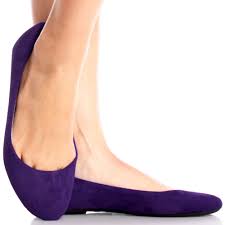

Finally, I want to make sure everyone understands, shoes do not cause bunions! Bunions are caused by a combination of foot type, genetics and are influenced by daily shoe wear. Certainly, if you wore a narrow, constrictive shoe 24 hours a day for years, your foot would take on that shape; but that is rarely the case!
"Foot shape" as referred to in the piece is more a result of the length of your toes. Some people have longer second toes and others have a longer great toe. Either way, you need to fit shoes to the longest toe. BTW- it is said that those with longer second toes are natural born leaders!
Toe box shape - square, round or pointed - is only one factor in shoe construction and the way they affect the feet. Heel height, the cut of the toe box and the point at which the pointed toe shoes curve are even more important factors! A pointed shoe that has an extended (faux) toe can be quite comfortable for many women no matter which toe is longer. Similarly, rounded toe shoes can often cut across the bunion area and be quite a problem.
Finally, I want to make sure everyone understands, shoes do not cause bunions! Bunions are caused by a combination of foot type, genetics and are influenced by daily shoe wear. Certainly, if you wore a narrow, constrictive shoe 24 hours a day for years, your foot would take on that shape; but that is rarely the case!
Thursday, November 29, 2012
Why is December the perfect time to take care of your foot problems?
Most active people choose the winter months to have foot surgery to allow them to return to full activity in time for Spring and Summer activities. Walking, gardening, running and even sunbathing are all activities that are enjoyed best after foot problems have resolved.
December is the month this is easiest to take advantage of satisfied insurance deductibles and when patients enjoy the smallest amount of out of pocket expenses.
With online holiday shopping so popular, holiday shopping is no longer a deterrent for foot surgery.
There is nothing like sitting with your feet elevated on a cold winter day with a warm fire nearby! Foot surgery recovery and winter go hand in hand (or foot in foot)!
December is the month this is easiest to take advantage of satisfied insurance deductibles and when patients enjoy the smallest amount of out of pocket expenses.
With online holiday shopping so popular, holiday shopping is no longer a deterrent for foot surgery.
There is nothing like sitting with your feet elevated on a cold winter day with a warm fire nearby! Foot surgery recovery and winter go hand in hand (or foot in foot)!
Tuesday, November 27, 2012
Don't Let Your Feet Keep You From Wearing High Heels!!
As both a woman who likes to be fashionable and a podiatrist that
needs to be sensible, my goal is to help women wear
the shoes they want to wear more comfortably!
Recently, FOX32 Chicago interviewed me for a story on cosmetic foot surgery for women who wear high heels. Like almost all podiatric surgeons, I do not consider most foot surgeries to be cosmetic even if the goal is to wear shoes more comfortably. Many women think of correcting bunions, hammertoes and other unattractive foot deformities as cosmetic; but there is usually a structural abnormality associated with those unsightly problems. Insurances almost always cover the correction of foot deformities - even if there is the added bonus of making your feet more attractive!
While FOX32 Chicago initially intended to focus on only cosmetic procedures, my interview clearly shows that when the feet are involved, the definition of what is cosmetic is clearly not black and white. While some newer procedures (such as dermal fillers to the ball of the feet and laser for fungal nails) are not covered by insurance, there are very few purely cosmetic surgeries of the feet.
Function of the foot is always a factor in solving any foot problem. Cosmetic benefits aside, foot surgery is aimed to improve foot function.
My main concern with women is being able to wear fashionable foot wear comfortably and smartly. I believe it is important for any podiatrist to counsel their patients on how to wear high heels safely, how best to shop for shoes and advocates knowing not only your true shoe size but also your foot type before shoe shopping.
Recently, FOX32 Chicago interviewed me for a story on cosmetic foot surgery for women who wear high heels. Like almost all podiatric surgeons, I do not consider most foot surgeries to be cosmetic even if the goal is to wear shoes more comfortably. Many women think of correcting bunions, hammertoes and other unattractive foot deformities as cosmetic; but there is usually a structural abnormality associated with those unsightly problems. Insurances almost always cover the correction of foot deformities - even if there is the added bonus of making your feet more attractive!
While FOX32 Chicago initially intended to focus on only cosmetic procedures, my interview clearly shows that when the feet are involved, the definition of what is cosmetic is clearly not black and white. While some newer procedures (such as dermal fillers to the ball of the feet and laser for fungal nails) are not covered by insurance, there are very few purely cosmetic surgeries of the feet.
Function of the foot is always a factor in solving any foot problem. Cosmetic benefits aside, foot surgery is aimed to improve foot function.
My main concern with women is being able to wear fashionable foot wear comfortably and smartly. I believe it is important for any podiatrist to counsel their patients on how to wear high heels safely, how best to shop for shoes and advocates knowing not only your true shoe size but also your foot type before shoe shopping.
Wednesday, August 24, 2011
Fallen Arches
I just answered a question on another blog about "fallen arches" are decided this was a topic that needs to be addressed - even if I have done that before!
Fallen arches are not normal. Usually it happens when the tendon that holds and supports the arch (the posterior tibial tendon) weakens or tears. This tendon can weaken with age, weight gain or flat feet. The problem is very subtle at first and may just present itself as subtle aching of the inside ankle and/or arch.
If diagnosed early on, simply supporting the tendon and the arch with custom orthotics is usually all that is needed; but if the tendon continues to be stressed without support it can tear or even rupture.
I currently have a patient who's tendon partially tore during her second pregnancy and she had been suffering for year until it finally ruptured.
Sometimes physical therapy is helpful, but if the tendon has tears and scar tissue, surgery is generally needed. The good news is that people do GREAT after repair of the tendon. Actually, that is the case with any tendon. If there is prolonged pain, there is always pathology. Once surgery addresses the pathology (tears or scar tissue) the person does great.
The only other consideration is what to do to stop the stress on the tendon after it is healed. Custom orthotics are used but it is also possible to have a stent inserted into the joint that supports the arch for a more permanent type of support. This surgery is a simple procedure that should be considered with this problem.
Fallen arches are not normal. Usually it happens when the tendon that holds and supports the arch (the posterior tibial tendon) weakens or tears. This tendon can weaken with age, weight gain or flat feet. The problem is very subtle at first and may just present itself as subtle aching of the inside ankle and/or arch.
If diagnosed early on, simply supporting the tendon and the arch with custom orthotics is usually all that is needed; but if the tendon continues to be stressed without support it can tear or even rupture.
I currently have a patient who's tendon partially tore during her second pregnancy and she had been suffering for year until it finally ruptured.
Sometimes physical therapy is helpful, but if the tendon has tears and scar tissue, surgery is generally needed. The good news is that people do GREAT after repair of the tendon. Actually, that is the case with any tendon. If there is prolonged pain, there is always pathology. Once surgery addresses the pathology (tears or scar tissue) the person does great.
The only other consideration is what to do to stop the stress on the tendon after it is healed. Custom orthotics are used but it is also possible to have a stent inserted into the joint that supports the arch for a more permanent type of support. This surgery is a simple procedure that should be considered with this problem.
Friday, July 22, 2011
Why Some Shoes No Longer Fit
I was getting ready for an upcoming trip and all set to pack my red/black/white floral skirt and my really cute red peep toe pumps that I haven't worn in awhile and slipped them on to make sure they still looked cute. But I got a surprise - they were no longer comfortable!
The fit of a shoe may change for a number of reasons. First of all, anyone with deformities such as bunions or hammertoes may find that shoes are suddenly causing more pressure and tightness around those deformities. This is usually a sign that those deformities are advancing, even if there is no pain associated with them. Custom orthotics made by a podiatrist can help reduce the progression of bunions and deformities.
Swelling of the feet often occurs in the summer months due to the heat. Swelling can tightness in shoes that were once comfortable. Swelling can also be due to a tendon problem or injury and should be evaluated by a podiatrist if persistent. Lower leg swelling that is continuous can be due to systemic problems, vein problems or even kidney or heart problems and should be evaluated by your primary care physician.
And finally, foot size can change as we get older. Pregnancy can cause the ligaments and tendons of the foot to stretch which may make the foot longer. The tendon that holds the arch commonly becomes stretched, torn or injured in people that have a flexible flat foot or are overweight. It is very important to see a podiatric physician if you develop pain in the arch with or without swelling!
So, I went shopping to set to find comfortable black sandals that I could wear with multiple outfits and I ended up finding really cute red sandals. Happy Day - red shoes make me happy!! It quickly became a really happy day when I saw the price of those red shoes!!
The fit of a shoe may change for a number of reasons. First of all, anyone with deformities such as bunions or hammertoes may find that shoes are suddenly causing more pressure and tightness around those deformities. This is usually a sign that those deformities are advancing, even if there is no pain associated with them. Custom orthotics made by a podiatrist can help reduce the progression of bunions and deformities.
Swelling of the feet often occurs in the summer months due to the heat. Swelling can tightness in shoes that were once comfortable. Swelling can also be due to a tendon problem or injury and should be evaluated by a podiatrist if persistent. Lower leg swelling that is continuous can be due to systemic problems, vein problems or even kidney or heart problems and should be evaluated by your primary care physician.
And finally, foot size can change as we get older. Pregnancy can cause the ligaments and tendons of the foot to stretch which may make the foot longer. The tendon that holds the arch commonly becomes stretched, torn or injured in people that have a flexible flat foot or are overweight. It is very important to see a podiatric physician if you develop pain in the arch with or without swelling!
So, I went shopping to set to find comfortable black sandals that I could wear with multiple outfits and I ended up finding really cute red sandals. Happy Day - red shoes make me happy!! It quickly became a really happy day when I saw the price of those red shoes!!
Subscribe to:
Posts (Atom)