Showing posts with label blisters. Show all posts

Monday, May 4, 2020

Do Your Feet Look Like This??

So many problems while we are staying at home can arise from not wearing shoes!  Even dry skin and calluses.  Friction and instability of the foot can lead to dryness and calluses of the heels.


There are a MILLION different creams and lotions out there to combat dry skin.  There is even a new foam that will be coming on the market soon that is helpful in repairing the skin layers!  But until then, heavy creams and even some with urea can be helpful in getting rid of dry skin. 


If severely dry, or cracked heels occur, you may need to see a podiatrist.  These cracks can be very painful and can become infected. 


Do not let your heel calluses go unattended!


Sunday, April 12, 2020

COVID 19 Signs in the TOES of People Without Symptoms

COVID 19 manifestations are now seen in young people, including kids, that are otherwise asymptomatic.   Due to the changes in the arteries and clotting issues, a variety of changes are showing up in the toes.

Discoloration, small sores and even just signs that look like an ingrown nail may be present. Please keep an eye out for these changes in your kids and in younger adults.  It could be a sign that they ARE infected even thought they may not have any respiratory symptoms.

(thank you to the mom's podiatry group for photos with permission).

Wednesday, July 11, 2018

Stilettos and Cobblestone - do the two work together???

Okay,  I am a little obsessed right now with Meghan Markle but not as much as Google thinks because I keep getting Meghan Markle news links!  But this one was pertinent.  Meghan wears heels on cobblestone in Dublin explores the difficulty wearing heels while walking on cobblestone streets!

I could swear I already wrote an article on this, but can't seem to find it.  The short answer is NO - of course high heels and cobblestones don't mix!  Walking on any uneven surface is difficult but cobblestone surface is uneven, irregular and a mix of contours joined together with sand.   And if you have ever tried walking in sand with heels, you know what additional problems that brings!

So what risks did Meghan take when walking on cobblestone in her 3 inch Sarah Flint shoes (not really stilettos if they are only 3 inches People Magazine)?  She risks spraining her ankles, spraying her foot, sustaining a fracture if she slips and getting those skinny heels stuck in that sand!

What the People article didn't talk about is the problem more women experience while wearing heels in another inconvenient surface:  grass.  They did provide a photo showing the Duchess of Sussex standing in the grass and mentioned that she was able to walk across the park, but the take home message in this instance is simply having those skinny heels sink into the grass!  I KNOW you have experienced that at least once.  in your high heel wearing life time!  Unlike walking on cobblestone, walking on grass while in heels once is certainly enough to make sure you don't make that mistake again.  Seems that getting stuck in the grass is more embarrassing than falling and spraining your ankles!  And who want to clean the mud off the heels while you are out and about all dressed up!

Bottom line - know where you will be walking BEFORE you venture out in those skinny heels!

Wednesday, April 29, 2015

Great - Now I Have Blisters BETWEEN My Toes!!

I read an advice column this past weekend suggesting to wear "toe socks" as a way to avoid blisters between the toes on a woman who recently started a walking program and I take issue with that advice! 

Blisters are a sign of irritation and blisters between the toes would indicate irritation of one toe against the adjacent toe.  Usually, there are bone protrusions on the adjacent toes that cause pressure from one toe to the next piggy.  Hammertoes commonly cause a thickness of the toe joints which can be an  irritant by themselves or with bone spurs on the toe bones.  These bony prominences, when pressed together in tight shoes, cause the body to try to protect itself by creating fluid under the skin.  That fluid turns into a blister and can become quite painful on its own due to inflammation. 
 
Wearing toe socks may seem to give cushioning there is already a blister present but tend to take up even more room in an already crowded space and wearers would find continued walking quite uncomfortable!  Small blisters usually resolve on their own although they may cause a callus over the area.  Blisters that are painful, whether between the toes or elsewhere, need to be relieved of the fluid.  Using a sterile needle to incise the blister on its most dependent location will work, but if any blood is in the blister or any fluid that is not clear comes out, it is time to see your podiatrist.  If any signs of infection are present (swelling, drainage, redness), a trip to the podiatrist is also very important.
 
The best way to avoid blisters is to make sure you are wearing shoes that are wide enough to comfortable fit all five toes!  I often advise my walkers to use running shoes.
 
Removing the bone spurs or correcting any hammertoes that may be present will usually solve the problem once and for all!

Tuesday, January 22, 2013

Shoe Shape vs. Foot Shape

I recently saw a Rachel Ray segment that talked about "foot shape" and how wearing a shoe that is a different shape than your foot can cause deformities such as bunions and hammertoes.  If only it were that simple!

"Foot shape" as referred to in the piece is more a result of the length of your toes.  Some people  have longer second toes and others have a longer great toe.  Either way, you need to fit shoes to the longest toe.  BTW- it is said that those with longer second toes are natural born leaders!

Toe box shape - square, round or pointed -  is only one factor in shoe construction and the way they affect the feet.  Heel height, the cut of the toe box and the point at which the pointed toe shoes curve  are even more important factors!  A pointed shoe that has an extended (faux) toe can be quite comfortable for many women no matter which toe is longer.  Similarly, rounded toe shoes can often cut across the bunion area and be quite a problem.
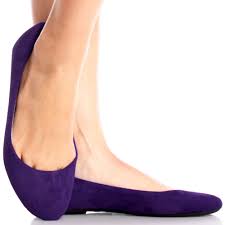


Finally, I want to make sure everyone understands, shoes do not cause bunions!  Bunions are caused by a combination of foot type, genetics and are influenced by daily shoe wear.  Certainly, if you wore a narrow, constrictive shoe 24 hours a day for years, your foot would take on that shape; but that is rarely the case! 

Friday, July 22, 2011

Why Some Shoes No Longer Fit

I was getting ready for an upcoming trip and all set to pack my red/black/white floral skirt and my really cute red peep toe pumps that I haven't worn in awhile and slipped them on to make sure they still looked cute. But I got a surprise - they were no longer comfortable!

The fit of a shoe may change for a number of reasons. First of all, anyone with deformities such as bunions or hammertoes may find that shoes are suddenly causing more pressure and tightness around those deformities. This is usually a sign that those deformities are advancing, even if there is no pain associated with them. Custom orthotics made by a podiatrist can help reduce the progression of bunions and deformities.

Swelling of the feet often occurs in the summer months due to the heat. Swelling can tightness in shoes that were once comfortable. Swelling can also be due to a tendon problem or injury and should be evaluated by a podiatrist if persistent. Lower leg swelling that is continuous can be due to systemic problems, vein problems or even kidney or heart problems and should be evaluated by your primary care physician.

And finally, foot size can change as we get older. Pregnancy can cause the ligaments and tendons of the foot to stretch which may make the foot longer. The tendon that holds the arch commonly becomes stretched, torn or injured in people that have a flexible flat foot or are overweight. It is very important to see a podiatric physician if you develop pain in the arch with or without swelling!

So, I went shopping to set to find comfortable black sandals that I could wear with multiple outfits and I ended up finding really cute red sandals. Happy Day - red shoes make me happy!! It quickly became a really happy day when I saw the price of those red shoes!!

Thursday, June 30, 2011

Summer Shoes - Flip Flops are NOT the Answer!!

With the weather improving, more and more people are participating in their favorite outdoor activities and for many people, the flip flop is the first shoe they reach for. Easy to put on, airy and light weight– flip flops seem like the perfect summer shoe!

But, all flip flops are NOT always the best choice for your feet

Sometimes, it IS appropriate and safe to wear flip flops. For example – its fine to wear them to the beach and the pool, relaxing outside in your own back yard, or at a party where you won’t be walking too much.

But most flip flops are not appropriate for walking, biking, doing lawn work or for other athletic activities. Flip flops should not be your go to shoes in the summer!

For those who might over use these flimsy non-supportive shoes, you risk

• Tendonitis
• Heel pain
• Stubbing or jamming toe
• Ankle injuries
• Foot lacerations

Not all flip flops are bad, but most are.

Those that can easily be bended in half from toe to heel and twisted as well will not provide adequate support for normal daily activities.
If the “toe thong” is made inexpensively, either by design or material, you can also experience blistering in between the toe area because. This is a very common problem with flip flops. You want to make sure there are no seams that would cause irritation and its best when the material is soft. Blistering can also occur with constant slippage of an ill fitting flip flop.

Not all flip flops are bad however. Some flip flops have a more structured, solid arch support and make with a more sturdy material. Look for ones that bend at the ball of the foot and do not twist easily. Thicker soles and padding can be found in some flip flops. Look for those that have somewhat of an arch, a deeper heel cup and a soft and natural toe thong.

Go to http://abclocal.go.com/wls/story?section=resources/lifestyle_community&id=8173033 to see my discussion of better flip flops with Linda Yu and Sylvia Perez on a recent ABC Chicago News story.

Any sandal or flip flop that forces you to scrunch your toes or use your tendons abnormally is not a shoe you should be wearing.

Any shoe related problems should not be ignored. The bottom line is that no matter what shoe you wear, if you have foot pain, see a podiatric physician- foot pain is never normal!