Showing posts with label feet. Show all posts

Wednesday, April 22, 2020

Women's Feet After Menopause

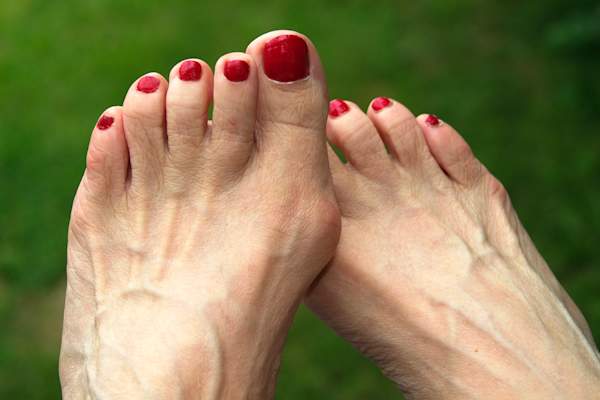
Does the ball of your feet cause  you pain when you walk or wear certain shoes?   Do you feel that your arch is falling as you get older?  Do you feel that your bunions and hammertoes are becoming more painful?  Is your skin more dry and calloused?  Menopause may be the culprit!  Hormones have major effects on our bodies, including our feet.  Both in pregnancy and after menopause, foot problems develop in many women.

See the article that I was interviewed for here.

bunions

Saturday, August 4, 2018

Heel Pain - Why Some Shoes Help and Others Don't!

Millions of people suffer from heel pain - most of which (although not all) is due to plantar fasciitis/heel spurs/plantar fasciosis.  Some people swear by their Vionics/Birkenstocks/Oofos/Chaos sandals and most podiatrists will tell you to wear a closed heel shoe such as a running shoe for stability.  So which shoe is right for you and why??

First of all, let me tell  you that not only am I a podiatric physician, but I also suffer from plantar fasciitis (PF) on and off.  I have personal experience as well as professional experience and knowledge of the anatomy and biomechanics of the lower extremities.  The simple answer is:  What works for you may NOT work for someone else!

The more complicated answer comes down to foot type, foot structure and the reason for your plantar fasciitis and how long you have had it.  These individual factors become especially important in controlling re-occurrence which is common with PF.

First of all, it is so important to get rid of PF before it becomes chronic. Acute PF is thought to be inflammatory but chronic is not.  Chronic PF is a topic in of itself; but for now, know that steroid injections often fail because chronic PF progresses beyond inflammation producing scar tissue or tears within the fascia itself.

There are two important parts to controlling most acute PF - control of your rearfoot (heel and subtalar joint) and allowing the tight tissues to stretch.  Heel control is an integral part of treating acute PF because it helps control the motion of the heel causing inflammation.  Shoes with a stiff heel counter (the back of the heel) such as running shoes are a very important part of resolving heel pain.  I tell all my patients to wear them 24/7 "for now" to control the heel.  It's not necessary once the pain subsides, but until then it is a must!

Rearfoot control is also achieved with most types of custom orthotics. (This is how they differ from over the counter arch supports sold as "orthotics"). There are many factors if prescribing custom orthotics based on your shoe wear, foot type and associated anatomy.  Even if the orthotics prescribed by your podiatrist don't help the acute pain, they are important in controlling the heel to prevent re-occurrence!  Hopefully your podiatrist explained this to you, but if not,  don't be upset if they don't help get rid of the acute pain because they are still very important!

Both flat feet and high arch feet can develop PF due to tightness of the fascia, but also can develop from tightness of the Achilles tendon and even the hamstrings.  Vionics and Birkenstocks help people because they have a negative heel (where the heel sits lower than the toe box) which helps to stretch the Achilles tendon. While those sandals may help with the pain while wearing them, they often don't improve the condition overall because they don't provide heel control.   I think they are great once the pain has subsided and for those times that you absolutely can't wear sneakers, but sneakers with heel control are much better at getting the problem under control quicker.  Running shoes that have a negative heel are a great tool in allowing stretching of the Achilles as well as providing heel control.

Finally, a few words about those sandals that I mentioned and others that are heavily marketed to the public for heel pain.   Whenever anyone talks about heel pain, recommendations for these sandals are given quickly but the success of specific sandals is based on individual foot type!  Oofos, for example, provide extra shock absorption so they may be great for a high arch foot type but not for those that need a negative heel.  Vionics (based on personal experience) seem to provide rearfoot control further back in the arch as opposed to the high mid-arch support found with  Chaos which is a different type of control.  I know for myself and my foot type, this makes a huge difference.  It is important to make sure you have a discussion with your podiatrist on which sandal might be best for YOU once you get the PF under control.

Controlling PF goes beyond the control of shoes and sandals; but with so many people making recommendations to their friends on which of these costly shoes to buy I felt compelled to write about the differences between them and why YOUR foot may need something different than your friends.  Please see a podiatrist well versed in PF if your heel pain persists for longer than 4-6 weeks to be properly evaluated for YOUR individual treatment and shoe recommendations!

Wednesday, July 25, 2018

IMPORTANT PEDICURE TIPS!!

We are in full swing of summer now and women everywhere are getting their weekly pedicures or bimonthly!  Best advice if you have callouses is to SEE A PODIATRIST FIRST!

(BTW - toe nails grow slower than fingernails so you do NOT need to have them done with every manicure).

Image result for pedicure

Image result for pedicure
I often have patients saying they "catch" fungus from a pedicure but I honestly think that is not always the case.  Direct infection to the skin of the feet and legs, however is another story.

While not common, there are certainly documented cases where infections occur as a result of transferring bacteria (or fungus) from one person to another.   CBS News just put out this article of a woman almost losing her leg because a contaminated callous shaver was used on her.

So here are my tips for pedicures!

1)  Pedicurists in most states are not allowed to use blades or other callous removers.  If you have callouses that are thick, painful or simply unsightly, SEE A PODIATRIST to have them removed before you have your pedicure!  The benefits to the skin from the pedicure will last much longer if you have the callouses removed properly from a podiatrist.

Pinch Callous
2) Understand that callouses are a result of a structural problem and will continue to develop unless those problems are corrected.  Your podiatrist (podiatric physician) will educate you on the whys, hows and whens that influence your callouses.  Sometimes simply wearing custom orthotics can get rid of that "pinch" callous on the joint of your big toe that many of us seem to have.


3) Go to a salon first thing in the morning when the tools and whirlpools have the least chance of being contaminated.

4) Make sure they are using freshly sterilized instruments, including the nail files!

5) Never shave just prior to going for a pedicure.  This will reduce the risk of bacteria entering your skin if there is a contamination.

Finally - enjoy your freshly painted pink/red/blue/gray toes!!


Wednesday, January 30, 2013

Frostbite - Should Health Women Worry??

When we think of frostbite in Chicago and other large cities, most people think of the homeless and others out without proper foot protection from the elements.  But working women, especially those who commute downtown, should also be cautious!

So many of my patients commute to the city.  They take the train from Naperville or surrounding western suburbs and walk to their offices from the train.  I can tell you that most of these women are not wearing Uggs as part of their winter foot wear if there is no snow.

Most women tend to wear the same dress shoes and hosiery for their multiple block walks to and from the train - unless they wear sneakers for a previously discussed foot problem.  These shoes, or fashion boots, lack the warmth that winter boots provide and most dress shoes leave a good part of the foot exposed.  This exposure - especially when the temps dip into the teens - can lead to frostbite in some people.

Risk factors include anyone with circulation problems or diabetes but even health women should be cautious if they are smokers, take certain medications or have something called Raynaud's. 

Raynaud's is often associated with some rheumatic diseases (Raynaud's phenomenon), but it can also be present by itself   Raynaud's is fairly common - even my 15 year old daughter has it!  Toes and occasionally fingers get very cold and even turn white when exposed to cold temperatures or other stressful triggers.  It is more common in women and those who live in colder climates.  Even while at home, my daughter's second toe often turns white.

I have my daughter rewarm her toe in warm water or with a warm compress until the normal color returns to her toe; but prevention is the key with women who experience this problem.  Wearing socks (even in the house during the cold months), wearing boots when outside and limiting exposure to the very cold air.  On the really cold days, I recommend to my patients that they take a cab to and from their offices and the train.

Raynauds is a vasospastic problem of the arteries which blocks the blood flow to the toes or fingers.  Risk factors for health women include the use of cold medications that include pseudoephedrine (Chlor-Trimeton, Sudafed) and birth control pills.  Women should not smoke if they have Raynauds - its the perfect and very real reason to give my daughter not to start smoking!

Friday, July 22, 2011

Why Some Shoes No Longer Fit

I was getting ready for an upcoming trip and all set to pack my red/black/white floral skirt and my really cute red peep toe pumps that I haven't worn in awhile and slipped them on to make sure they still looked cute. But I got a surprise - they were no longer comfortable!

The fit of a shoe may change for a number of reasons. First of all, anyone with deformities such as bunions or hammertoes may find that shoes are suddenly causing more pressure and tightness around those deformities. This is usually a sign that those deformities are advancing, even if there is no pain associated with them. Custom orthotics made by a podiatrist can help reduce the progression of bunions and deformities.

Swelling of the feet often occurs in the summer months due to the heat. Swelling can tightness in shoes that were once comfortable. Swelling can also be due to a tendon problem or injury and should be evaluated by a podiatrist if persistent. Lower leg swelling that is continuous can be due to systemic problems, vein problems or even kidney or heart problems and should be evaluated by your primary care physician.

And finally, foot size can change as we get older. Pregnancy can cause the ligaments and tendons of the foot to stretch which may make the foot longer. The tendon that holds the arch commonly becomes stretched, torn or injured in people that have a flexible flat foot or are overweight. It is very important to see a podiatric physician if you develop pain in the arch with or without swelling!

So, I went shopping to set to find comfortable black sandals that I could wear with multiple outfits and I ended up finding really cute red sandals. Happy Day - red shoes make me happy!! It quickly became a really happy day when I saw the price of those red shoes!!

Thursday, June 30, 2011

Summer Shoes - Flip Flops are NOT the Answer!!

With the weather improving, more and more people are participating in their favorite outdoor activities and for many people, the flip flop is the first shoe they reach for. Easy to put on, airy and light weight– flip flops seem like the perfect summer shoe!

But, all flip flops are NOT always the best choice for your feet

Sometimes, it IS appropriate and safe to wear flip flops. For example – its fine to wear them to the beach and the pool, relaxing outside in your own back yard, or at a party where you won’t be walking too much.

But most flip flops are not appropriate for walking, biking, doing lawn work or for other athletic activities. Flip flops should not be your go to shoes in the summer!

For those who might over use these flimsy non-supportive shoes, you risk

• Tendonitis
• Heel pain
• Stubbing or jamming toe
• Ankle injuries
• Foot lacerations

Not all flip flops are bad, but most are.

Those that can easily be bended in half from toe to heel and twisted as well will not provide adequate support for normal daily activities.
If the “toe thong” is made inexpensively, either by design or material, you can also experience blistering in between the toe area because. This is a very common problem with flip flops. You want to make sure there are no seams that would cause irritation and its best when the material is soft. Blistering can also occur with constant slippage of an ill fitting flip flop.

Not all flip flops are bad however. Some flip flops have a more structured, solid arch support and make with a more sturdy material. Look for ones that bend at the ball of the foot and do not twist easily. Thicker soles and padding can be found in some flip flops. Look for those that have somewhat of an arch, a deeper heel cup and a soft and natural toe thong.

Go to http://abclocal.go.com/wls/story?section=resources/lifestyle_community&id=8173033 to see my discussion of better flip flops with Linda Yu and Sylvia Perez on a recent ABC Chicago News story.

Any sandal or flip flop that forces you to scrunch your toes or use your tendons abnormally is not a shoe you should be wearing.

Any shoe related problems should not be ignored. The bottom line is that no matter what shoe you wear, if you have foot pain, see a podiatric physician- foot pain is never normal!