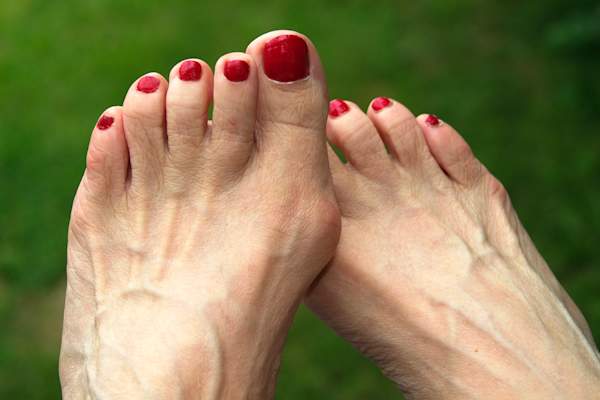
So many problems while we are staying at home can arise from not wearing shoes! Even dry skin and calluses. Friction and instability of the foot can lead to dryness and calluses of the heels.
There are a MILLION different creams and lotions out there to combat dry skin. There is even a new foam that will be coming on the market soon that is helpful in repairing the skin layers! But until then, heavy creams and even some with urea can be helpful in getting rid of dry skin.
If severely dry, or cracked heels occur, you may need to see a podiatrist. These cracks can be very painful and can become infected.
Do not let your heel calluses go unattended!
Showing posts with label corns and calluses. Show all posts
Monday, May 4, 2020
Wednesday, April 22, 2020
Women's Feet After Menopause
Does the ball of your feet cause you pain when you walk or wear certain shoes? Do you feel that your arch is falling as you get older? Do you feel that your bunions and hammertoes are becoming more painful? Is your skin more dry and calloused? Menopause may be the culprit! Hormones have major effects on our bodies, including our feet. Both in pregnancy and after menopause, foot problems develop in many women.
See the article that I was interviewed for here.
Sunday, April 12, 2020
COVID 19 Signs in the TOES of People Without Symptoms
COVID 19 manifestations are now seen in young people, including kids, that are otherwise asymptomatic. Due to the changes in the arteries and clotting issues, a variety of changes are showing up in the toes.
Discoloration, small sores and even just signs that look like an ingrown nail may be present. Please keep an eye out for these changes in your kids and in younger adults. It could be a sign that they ARE infected even thought they may not have any respiratory symptoms.
(thank you to the mom's podiatry group for photos with permission).
Discoloration, small sores and even just signs that look like an ingrown nail may be present. Please keep an eye out for these changes in your kids and in younger adults. It could be a sign that they ARE infected even thought they may not have any respiratory symptoms.
(thank you to the mom's podiatry group for photos with permission).
Wednesday, January 2, 2019
Dancing in the New Year! Resolutions Your Feet Will LOVE
As the countdown to the New Year fades and we retire the "special event" heels for another year, it's time to think about what resolutions you can make to start the year on the right foot!
Okay, on the left foot too. After weeks of holidays and parties, the start of the year is a perfect time to give your feet a rest. Below are five resolutions to help give them the pampering they deserve.
Give your toenails a breather.
Unless you have a mid-winter warm weather trip planned, January is the perfect time to evaluate the health of your toe nails. Remove the polish and let the nails breath! Look for any white spots or yellow discoloration. Fungus often hides behind the veil of polish and it's important to identify the infection early for the best chance of successful treatment. Laser treatments, combined with topical treatment, will give you the best odds of getting rid of the fungus in time for summer.
Protect your fascia from the strain and gain!
The plantar fascia is the tissue that lies on the bottom of your feet running from your heels to the balls of your feet. Strain and stress on the tissue is common with preparations for holidays including extra shopping and cooking. Speaking of holiday cooking, stress is also increased with the weight gain that may come along with it. Plantar Fasciitis is the common term used for strain of the fascia and presents itself as heel or arch pain. At home treatments including stretching and wearing shoes with supportive heels but the pain can be stubborn and used to require surgery. Good news is there are now many new less invasive treatments if your heel pain doesn't go away on its own!
Have your other resolutions be supported by your foot wear!
If you have resolved to be more active, make sure you are wearing the proper foot wear. Running is the easiest sport to take on but its important to make sure you are wearing running shoes which are designed for heel to toe motion. Running shoes are also the perfect shoe for athletic walking because they padding and provide ample room for the toes. Court sports, however, require shoes that allow for side to side motion so tennis shoes have a defined purpose and are not just a type of casual foot wear. Finally, for those that take to the hoops, basketball shoes are designed with added stability for the ankle. As you begin your new sport, remember: foot pain is never normal. Increased activity can result in stress on the bones and tendons, and ligaments are prone to sprains. Get checked out if pain remains after a day or two of rest, elevation and icing an injury.
Give your high heels a break.
The best part of winter is that many styles of boots are either flat or with a lower heel. High heels put constant pressure on the ball of the foot - over seven time the normal pressure with heels as low as three inches. Wearing shoes with lower heels will allow the balls of the feet (specifically the metatarsal heads) a chance to rebound from the stress and strain that is placed on the soft tissues surrounding the area. Common injuries to this area due to high heels include bursitis, torn ligaments, displacing the natural padding and stress fractures.
Give your own heels a break.
Winter brings on dry, cracked heels. Partially due to the dryness of the cold winter air; but also due to friction that occurs on our heels in boots and other shoes that may not provide enough heel support. Treating dry cracked skin is important before the cracks deepen and develop fissures which may become infected. I recently read a beauty tip to crush aspirin to use in a lotion. It sounds crazy but aspirin has acetic acid and acids are used to help get through the dryness. A much better solution is to treat the skin with a prepared acid-based lotion including those with lactic, salicylic or hyaluronic or glycolic acids. These lotions and creams will exfoliate the dry skin to different degrees. As always, be sure to discuss any treatments of the feet with your podiatric physician to make sure they are appropriate - especially if you are a diabetic or have circulatory problems.
Here is to a starting the New Year with Health Feet!
Okay, on the left foot too. After weeks of holidays and parties, the start of the year is a perfect time to give your feet a rest. Below are five resolutions to help give them the pampering they deserve.
Give your toenails a breather.
Unless you have a mid-winter warm weather trip planned, January is the perfect time to evaluate the health of your toe nails. Remove the polish and let the nails breath! Look for any white spots or yellow discoloration. Fungus often hides behind the veil of polish and it's important to identify the infection early for the best chance of successful treatment. Laser treatments, combined with topical treatment, will give you the best odds of getting rid of the fungus in time for summer.
Protect your fascia from the strain and gain!
The plantar fascia is the tissue that lies on the bottom of your feet running from your heels to the balls of your feet. Strain and stress on the tissue is common with preparations for holidays including extra shopping and cooking. Speaking of holiday cooking, stress is also increased with the weight gain that may come along with it. Plantar Fasciitis is the common term used for strain of the fascia and presents itself as heel or arch pain. At home treatments including stretching and wearing shoes with supportive heels but the pain can be stubborn and used to require surgery. Good news is there are now many new less invasive treatments if your heel pain doesn't go away on its own!
Have your other resolutions be supported by your foot wear!
If you have resolved to be more active, make sure you are wearing the proper foot wear. Running is the easiest sport to take on but its important to make sure you are wearing running shoes which are designed for heel to toe motion. Running shoes are also the perfect shoe for athletic walking because they padding and provide ample room for the toes. Court sports, however, require shoes that allow for side to side motion so tennis shoes have a defined purpose and are not just a type of casual foot wear. Finally, for those that take to the hoops, basketball shoes are designed with added stability for the ankle. As you begin your new sport, remember: foot pain is never normal. Increased activity can result in stress on the bones and tendons, and ligaments are prone to sprains. Get checked out if pain remains after a day or two of rest, elevation and icing an injury.
Give your high heels a break.
The best part of winter is that many styles of boots are either flat or with a lower heel. High heels put constant pressure on the ball of the foot - over seven time the normal pressure with heels as low as three inches. Wearing shoes with lower heels will allow the balls of the feet (specifically the metatarsal heads) a chance to rebound from the stress and strain that is placed on the soft tissues surrounding the area. Common injuries to this area due to high heels include bursitis, torn ligaments, displacing the natural padding and stress fractures.
Give your own heels a break.
Winter brings on dry, cracked heels. Partially due to the dryness of the cold winter air; but also due to friction that occurs on our heels in boots and other shoes that may not provide enough heel support. Treating dry cracked skin is important before the cracks deepen and develop fissures which may become infected. I recently read a beauty tip to crush aspirin to use in a lotion. It sounds crazy but aspirin has acetic acid and acids are used to help get through the dryness. A much better solution is to treat the skin with a prepared acid-based lotion including those with lactic, salicylic or hyaluronic or glycolic acids. These lotions and creams will exfoliate the dry skin to different degrees. As always, be sure to discuss any treatments of the feet with your podiatric physician to make sure they are appropriate - especially if you are a diabetic or have circulatory problems.
Here is to a starting the New Year with Health Feet!
Wednesday, July 25, 2018
IMPORTANT PEDICURE TIPS!!
We are in full swing of summer now and women everywhere are getting their weekly pedicures or bimonthly! Best advice if you have callouses is to SEE A PODIATRIST FIRST!
(BTW - toe nails grow slower than fingernails so you do NOT need to have them done with every manicure).


I often have patients saying they "catch" fungus from a pedicure but I honestly think that is not always the case. Direct infection to the skin of the feet and legs, however is another story.
While not common, there are certainly documented cases where infections occur as a result of transferring bacteria (or fungus) from one person to another. CBS News just put out this article of a woman almost losing her leg because a contaminated callous shaver was used on her.
So here are my tips for pedicures!
1) Pedicurists in most states are not allowed to use blades or other callous removers. If you have callouses that are thick, painful or simply unsightly, SEE A PODIATRIST to have them removed before you have your pedicure! The benefits to the skin from the pedicure will last much longer if you have the callouses removed properly from a podiatrist.
2) Understand that callouses are a result of a structural problem and will continue to develop unless those problems are corrected. Your podiatrist (podiatric physician) will educate you on the whys, hows and whens that influence your callouses. Sometimes simply wearing custom orthotics can get rid of that "pinch" callous on the joint of your big toe that many of us seem to have.
3) Go to a salon first thing in the morning when the tools and whirlpools have the least chance of being contaminated.
4) Make sure they are using freshly sterilized instruments, including the nail files!
5) Never shave just prior to going for a pedicure. This will reduce the risk of bacteria entering your skin if there is a contamination.
Finally - enjoy your freshly painted pink/red/blue/gray toes!!
(BTW - toe nails grow slower than fingernails so you do NOT need to have them done with every manicure).
I often have patients saying they "catch" fungus from a pedicure but I honestly think that is not always the case. Direct infection to the skin of the feet and legs, however is another story.
While not common, there are certainly documented cases where infections occur as a result of transferring bacteria (or fungus) from one person to another. CBS News just put out this article of a woman almost losing her leg because a contaminated callous shaver was used on her.
So here are my tips for pedicures!
1) Pedicurists in most states are not allowed to use blades or other callous removers. If you have callouses that are thick, painful or simply unsightly, SEE A PODIATRIST to have them removed before you have your pedicure! The benefits to the skin from the pedicure will last much longer if you have the callouses removed properly from a podiatrist.
![]() |
| Pinch Callous |
4) Make sure they are using freshly sterilized instruments, including the nail files!
5) Never shave just prior to going for a pedicure. This will reduce the risk of bacteria entering your skin if there is a contamination.
Finally - enjoy your freshly painted pink/red/blue/gray toes!!
Friday, August 28, 2015
When Your Feet Still Hurt AFTER You Take Your Heels Off!
High Heels - some people love them, some people leave them. Most women are like myself, wear them on occasions. Granted, most women will admit that their feet hurt while they are wearing their heels, but what does it mean if your feet hurt after you take them off?
Pain at the ball of the foot, most commonly felt while wearing high heels, can be more of a problem then direct pressure from shoes. Wearing heels, even occasionally, can cause tearing in one or more of the ligaments that are on the bottom of the joints located at the ball of the foot. Pain at the ball of the foot is usually due to inflammation, scar tissue or a partial tear of this ligament. The pain remains even when wearing flat shoes or without shoes because damage has occurred.
This ligament, known as the plantar plate, is responsible for keeping the toes straight. When torn even partially, the ligament causes the toe to rotate or displace over time with or without pain. Even without pain, there are can be swelling on the top of the foot in that region. But its not just pain, swelling and damage to the ligament that you need to worry about. It is not uncommon to develop hammertoes because of a disruption of this ligament.
Treatment for this problem is dependent on when you seek treatment and how much damage there is to the tissue. Sometimes extended physical therapy and taking the pressure off the ligament can allow the tissue to heal. Often, using some of the newer forms of regenerative medicine can result in a quicker resolution. Finally, surgery may be necessary as a last resort.
One thing to caution you on pain in this area. NEVER have a cortisone injection unless you have ruled out damage to this ligament. Cortisone, often used for inflammation in the area and/or neuromas in the area can weaken the ligament and cause further damage.
Pain at the ball of the foot, most commonly felt while wearing high heels, can be more of a problem then direct pressure from shoes. Wearing heels, even occasionally, can cause tearing in one or more of the ligaments that are on the bottom of the joints located at the ball of the foot. Pain at the ball of the foot is usually due to inflammation, scar tissue or a partial tear of this ligament. The pain remains even when wearing flat shoes or without shoes because damage has occurred.
This ligament, known as the plantar plate, is responsible for keeping the toes straight. When torn even partially, the ligament causes the toe to rotate or displace over time with or without pain. Even without pain, there are can be swelling on the top of the foot in that region. But its not just pain, swelling and damage to the ligament that you need to worry about. It is not uncommon to develop hammertoes because of a disruption of this ligament.
Treatment for this problem is dependent on when you seek treatment and how much damage there is to the tissue. Sometimes extended physical therapy and taking the pressure off the ligament can allow the tissue to heal. Often, using some of the newer forms of regenerative medicine can result in a quicker resolution. Finally, surgery may be necessary as a last resort.
One thing to caution you on pain in this area. NEVER have a cortisone injection unless you have ruled out damage to this ligament. Cortisone, often used for inflammation in the area and/or neuromas in the area can weaken the ligament and cause further damage.
Thursday, November 29, 2012
Why is December the perfect time to take care of your foot problems?
Most active people choose the winter months to have foot surgery to allow them to return to full activity in time for Spring and Summer activities. Walking, gardening, running and even sunbathing are all activities that are enjoyed best after foot problems have resolved.
December is the month this is easiest to take advantage of satisfied insurance deductibles and when patients enjoy the smallest amount of out of pocket expenses.
With online holiday shopping so popular, holiday shopping is no longer a deterrent for foot surgery.
There is nothing like sitting with your feet elevated on a cold winter day with a warm fire nearby! Foot surgery recovery and winter go hand in hand (or foot in foot)!
December is the month this is easiest to take advantage of satisfied insurance deductibles and when patients enjoy the smallest amount of out of pocket expenses.
With online holiday shopping so popular, holiday shopping is no longer a deterrent for foot surgery.
There is nothing like sitting with your feet elevated on a cold winter day with a warm fire nearby! Foot surgery recovery and winter go hand in hand (or foot in foot)!
Tuesday, January 18, 2011
Resolution#11: Don’t believe rumors and don’t be afraid of the unknown
If foot surgery is recommended to you, there is no reason to panic. Foot surgery is designed to not only treat existing conditions, but to prevent further ones as well. Foot surgery rarely requires you to be off your feet for more than a few days, although some surgeries may require you to either have a cast or use crutches for up to several weeks. Our patients find that pain is usually mild after foot surgery, if at all. Our surgeons have the education, training and experience you want in a physician! When performed by either Dr. Marlene Reid or Dr. Lawrence Kosova, your feet and ankles will be in good hands!
Saturday, January 15, 2011
Resolution #9: Clear out that fungal infection once and for all!
2011 brings much good news for fungal nails! New laser treatments are now being used to attack the fungus within and beneath the nails and are showing great success and Family Podiatry Center is the first (and one of the only) offices to offer it in the western suburbs! It’s no longer necessary to decide if the anti-fungal pills are worth the risk – laser treatments for fungal nails will change the way we look at our toe nails!
The laser we are using is a dual wave length laser that acts by destroying the fungal cells within the nail and the skin beneath the nail. The results we have been seeing are dramatic. The advantage for this laser is that you only have to treat the nails that have the fungus so it is more economical than outer options.
Wednesday, January 12, 2011
Resolution #8: Walk for fitness but make sure you have the right gear
Walking is the easiest fitness program you can create but you need the right gear! A good pair of walking or running shoes that compliments your foot type is essential. Many people also benefit from custom orthotics that are like eye glasses for your feet. Custom Orthotics made by a podiatrist are prescribed based on your foot type, problems you are having and the amount of control you may require to keep your feet working their best. At Family Podiatry Center, orthotics are used to control progressive deformities such as bunions and hammertoes, relieve stressed tendons and to prevent additional injuries.
Orthotics can be made from a foam impression (the least accurate method), a plaster cast (the most traditional method) and the way that Family Podiatry Center makes them, from a computer analysis of the way you walk (the most advanced and accurate method). The computer analysis can be used for all types of orthotics - sport, dress or even sandal orthotics!
Patient satisfaction for both our dress and sport orthotics has never been higher! Typically, people relate that they can't believe the difference and can't imagine walking without their orthotics.
Orthotics can be made from a foam impression (the least accurate method), a plaster cast (the most traditional method) and the way that Family Podiatry Center makes them, from a computer analysis of the way you walk (the most advanced and accurate method). The computer analysis can be used for all types of orthotics - sport, dress or even sandal orthotics!
Patient satisfaction for both our dress and sport orthotics has never been higher! Typically, people relate that they can't believe the difference and can't imagine walking without their orthotics.
Tuesday, January 11, 2011
Resolution #7: Give your toes a break
Hammertoes are deformities of the digits (toes) that cause them to bend or curve. They can be flexible or rigid and often cause pain, corns or bursitis on the tops of the toes. Severe hammertoes can even cause problems at the ball of the foot and make walking difficult with or without shoes. Changing your shoes can help give them more room to sit comfortably, but often surgery is necessary to “break” the toes to allow them to lie straight to avoid these problems.
When is it time to have your hammertoes corrected? Unlike bunions, hammertoes can be put off as the surgery usually involves destroying the joint sp it is not so necessary to try to preserve the joint. However, that being said; hammertoes are progressive and if treated early, it is possible to save the joint if treatment is during the flexible state.
Monday, January 10, 2011
Resolution #6: Take advantage of new technologies
So many new technologies now exist for treating everything from chronic pain to heel pain to flat feet to lasers for fungal nails.
Stay tuned for more info on lasers for fungal nails in the upcoming weeks!!!!!
Sunday, January 9, 2011
Resolution #5: Treat your injuries with the respect they deserve
Each week, I see at least one or two paients telling me they has a previous injury and they are now having related problems! Sometimes it is the same injury or sometimes it is a problem that occured at the same time of an injury that was treated at an emergency room but was ignored by the emergency room staff!
Far too often we hear of people simply getting an ace wrap for an ankle injury! Injuries need to be addressed as soon as possible and need to be given proper attention. Injured soft tissues (ligaments and tendons) need as much support, if not more, than broken bones. If they are not treated properly, re-injury of the tissue is likely in the future and scar tissue and chronic problems can easily occur. If pain persists even after you have been told by an emergency room or other doctor that you didn’t suffer a fracture, please make an appointment at Family Podiatry Center to properly evaluate your soft tissues. Soft tissue injuries including sports injury are a specialty of our doctors.
Saturday, January 8, 2011
Resolution #4: Don’t let bunions make you or break you!
Bunions are more than that bump at the base of your big toe. Bunions are deformities of the joint due foot type and bone structure. Bunions are progressive deformities in both women and men. The longer they are left untreated, the more likely they are to develop debilitating arthritis and to interfere with your daily activities. Don’t wait until they are severe to have them corrected! It is best to treat them before they become arthritic. Our surgeons will use X-rays to determine what stage your bunion is in and how best to treat it. Most of our bunion patients are back on their feet within a few days of surgery.
A patient that had surgery right before the end of the year came in for her follow up visit last week and couldn't believe how easy the surgery was. She said she only took two pain pills. Don't be afraid of surgery if it is recommended - certainly feel free to get a second opinion, but be sure that the opinion discusses what procedure should be performed, not just if you are ready for surgery.
Wednesday, January 5, 2011
Resolution #3: Don’t put off to tomorrow, what you should do today
Foot pain is not normal. Each foot is unique and we all have different foot structures that contribute to most painful problems. Ailments and disorders can occur with any of the 26 bones and 20 muscles in each foot. And don’t forget about the bones, tendons and ligaments of the ankles! Podiatrists are physicians trained specifically in the foot and ankle and have the experience, training and education to diagnose exactly what is causing your pain.
Tuesday, January 4, 2011
Resolution #2: Never be caught with your shoes off if you have heel pain.
Heel pain is very common and makes up 35% of our practice. Wearing shoes with a firm heel counter is very important in controlling plantar fasciitis, the leading cause of heel pain. If left untreated, this inflammatory problem can progress to a much more severe problem of tearing and scar tissue. Having proper heel support is the first step in controlling the progression of heel pain. Heel pain lasting longer than two months should be evaluated by one of our podiatric physicians. We specialize in chronic heel pain and have been innovative in advanced and noninvasive treatments.
I have my patients start with the basics - no matter how long they have had the heel pain or even if they have been treated elsewhere because I believe in them so much! Proper heel support, stretching of the fascia and the Achilles and education on shoe wear is the basis for anyone with heel pain.
For those with chronic heel pain (more than a few months), there is great hope! I have been using radiofrequencywith great success.
I have my patients start with the basics - no matter how long they have had the heel pain or even if they have been treated elsewhere because I believe in them so much! Proper heel support, stretching of the fascia and the Achilles and education on shoe wear is the basis for anyone with heel pain.
For those with chronic heel pain (more than a few months), there is great hope! I have been using radiofrequencywith great success.
Sunday, January 2, 2011
Resolution #1: If the shoe doesn’t fit, don’t wear it!
It’s so tempting for women to buy shoes that don’t necessarily fit - especially if they are on sale or perfectly match an outfit. Do your feet a favor and resolve to only buy shoes that do not pinch, squeeze or slip when you try them on. And don’t just try on a potential new pair of shoes; get off the carpeted area of the shoe store and really walk around in them to determine if they are a good fit.
Other shoe shopping tips to remember:
-shop for shoes at the end of the day so that any naturally occurring swelling has already occurred
-wear the appropriate hosiery for the shoes you are buying
-know your foot type before shopping for athletic shoes - a podiatrist can help you determine your foot type
-know your heel height limit, some women can wear 4" heels, but others may have to settle for 3"
Other shoe shopping tips to remember:
-shop for shoes at the end of the day so that any naturally occurring swelling has already occurred
-wear the appropriate hosiery for the shoes you are buying
-know your foot type before shopping for athletic shoes - a podiatrist can help you determine your foot type
-know your heel height limit, some women can wear 4" heels, but others may have to settle for 3"
2011 Resolutions to Walk With
There are resolutions for everything from weight loss to self-betterment to political correctness - all intended to take you to a better place in 2011. Why not for your feet? You can’t go anywhere in 2011 without your feet taking you every step of the way!
For the next 11 days, I will post a resolution sure to keep you on track and walking in the right direction!!
Coming on Monday - Resolution #1: If the shoe doesn’t fit, don’t wear it!
For the next 11 days, I will post a resolution sure to keep you on track and walking in the right direction!!
Coming on Monday - Resolution #1: If the shoe doesn’t fit, don’t wear it!
Tuesday, December 7, 2010
Traveling in 2010
A woman I met this week was telling me the worst thing about traveling for her is not the security, not the lack of snacks given on the plane, not the lack of a pillow on morning flights - but the problems with her feet when she travels!! I don't think she even knew I was a podiatric physician (podiatrist)!!
She was complaining that her feet sweat a lot and that she is very uncomfortable when flying. She is bothered when she has to take her shoes off and expose her feet and feels very constrained when in the air. This was the first time I have heard someone listing their feet as their main problem with flying!!
Here are some tips to keep your feet healthy and comfortable when flying.
1) ALWAYS WEAR SOCKS!! It is just too gross to think about all those people who take their shoes off to go through security. Even if you just wear socks until you get to the other side of security. I keep a pair of white cotton ankle socks in my purse to slip on as I slip off my shoes.
2) Don't wear nylons when you fly. Several reasons - first of all, nylon holds moisture so your feet will feel sweaty. Second, your feet will feel restricted in them, especially if your feet swell while you are on the plane which is very common. Finally, and I heard this on the Oprah show and it made an impression on me, if you are in a plane crash that involves fire, nylons will spread the flames!
3) Wear shoes that you can run in, walk in, and run in! You never know when you will be running to a gate! I like to wear shoes that are easy to get off and on to make security go smoothly. I also put my shoes down the conveyor belt first so that they are there ready for me to put back on while my other things are still going through the x-ray. Low heeled boots with a zipper are perfect for travel!
4) Put your feet through a range of motion while you are in your seat. Making circles or even spelling out letters with your feet will help keep swelling and stiffness down.
5) Enjoy your flight and hopefully the feet will be the last thing on your mind as you fly over the Grand Canyon!!
She was complaining that her feet sweat a lot and that she is very uncomfortable when flying. She is bothered when she has to take her shoes off and expose her feet and feels very constrained when in the air. This was the first time I have heard someone listing their feet as their main problem with flying!!
Here are some tips to keep your feet healthy and comfortable when flying.
1) ALWAYS WEAR SOCKS!! It is just too gross to think about all those people who take their shoes off to go through security. Even if you just wear socks until you get to the other side of security. I keep a pair of white cotton ankle socks in my purse to slip on as I slip off my shoes.
2) Don't wear nylons when you fly. Several reasons - first of all, nylon holds moisture so your feet will feel sweaty. Second, your feet will feel restricted in them, especially if your feet swell while you are on the plane which is very common. Finally, and I heard this on the Oprah show and it made an impression on me, if you are in a plane crash that involves fire, nylons will spread the flames!
3) Wear shoes that you can run in, walk in, and run in! You never know when you will be running to a gate! I like to wear shoes that are easy to get off and on to make security go smoothly. I also put my shoes down the conveyor belt first so that they are there ready for me to put back on while my other things are still going through the x-ray. Low heeled boots with a zipper are perfect for travel!
4) Put your feet through a range of motion while you are in your seat. Making circles or even spelling out letters with your feet will help keep swelling and stiffness down.
5) Enjoy your flight and hopefully the feet will be the last thing on your mind as you fly over the Grand Canyon!!
Wednesday, December 1, 2010
New Flip Flop Danger
So I thought I have heard all the flip flop injury stories: getting one caught on an escalator, losing a flip flop when running, tripping over the end of the shoe, having the flip flop get stuck in bicycle spokes... and then until the other day I heard a new one!
A patient told me he tripped on the gas line while at a gas station! He fell, sprained his ankle AND broke a bone in his foot! He went to the ER for his ankle, but they totally ignored his foot pain.
Its not that uncommon to injure your foot when you sprain an ankle. The twisting can not only stretch the ligaments of the ankle, but can also cause a tendon to pull off one of the bones on the outside of the foot. Most emergency rooms will focus on the obvious - the ankle sprain and few ER doctors are even aware of the related injuries that can happen to the foot.
Whether its due to a flip flop injury, fall on the ice, or soccer injury, the BEST place to go after an ankle sprain is NOT the ER, but the office of a podiatric physician! Today's Podiatrists have the education, training and experience to properly evaluate ankle and foot injuries like no other physician. With almost all podiatrists having in office x-rays and many having diagnostic ultrasound, all your bone and soft tissue injuries can be identified properly the first time around! AND make sure you have the proper treatment - not just an ace wrap and crutches!
A patient told me he tripped on the gas line while at a gas station! He fell, sprained his ankle AND broke a bone in his foot! He went to the ER for his ankle, but they totally ignored his foot pain.
Its not that uncommon to injure your foot when you sprain an ankle. The twisting can not only stretch the ligaments of the ankle, but can also cause a tendon to pull off one of the bones on the outside of the foot. Most emergency rooms will focus on the obvious - the ankle sprain and few ER doctors are even aware of the related injuries that can happen to the foot.
Whether its due to a flip flop injury, fall on the ice, or soccer injury, the BEST place to go after an ankle sprain is NOT the ER, but the office of a podiatric physician! Today's Podiatrists have the education, training and experience to properly evaluate ankle and foot injuries like no other physician. With almost all podiatrists having in office x-rays and many having diagnostic ultrasound, all your bone and soft tissue injuries can be identified properly the first time around! AND make sure you have the proper treatment - not just an ace wrap and crutches!
Subscribe to:
Posts (Atom)